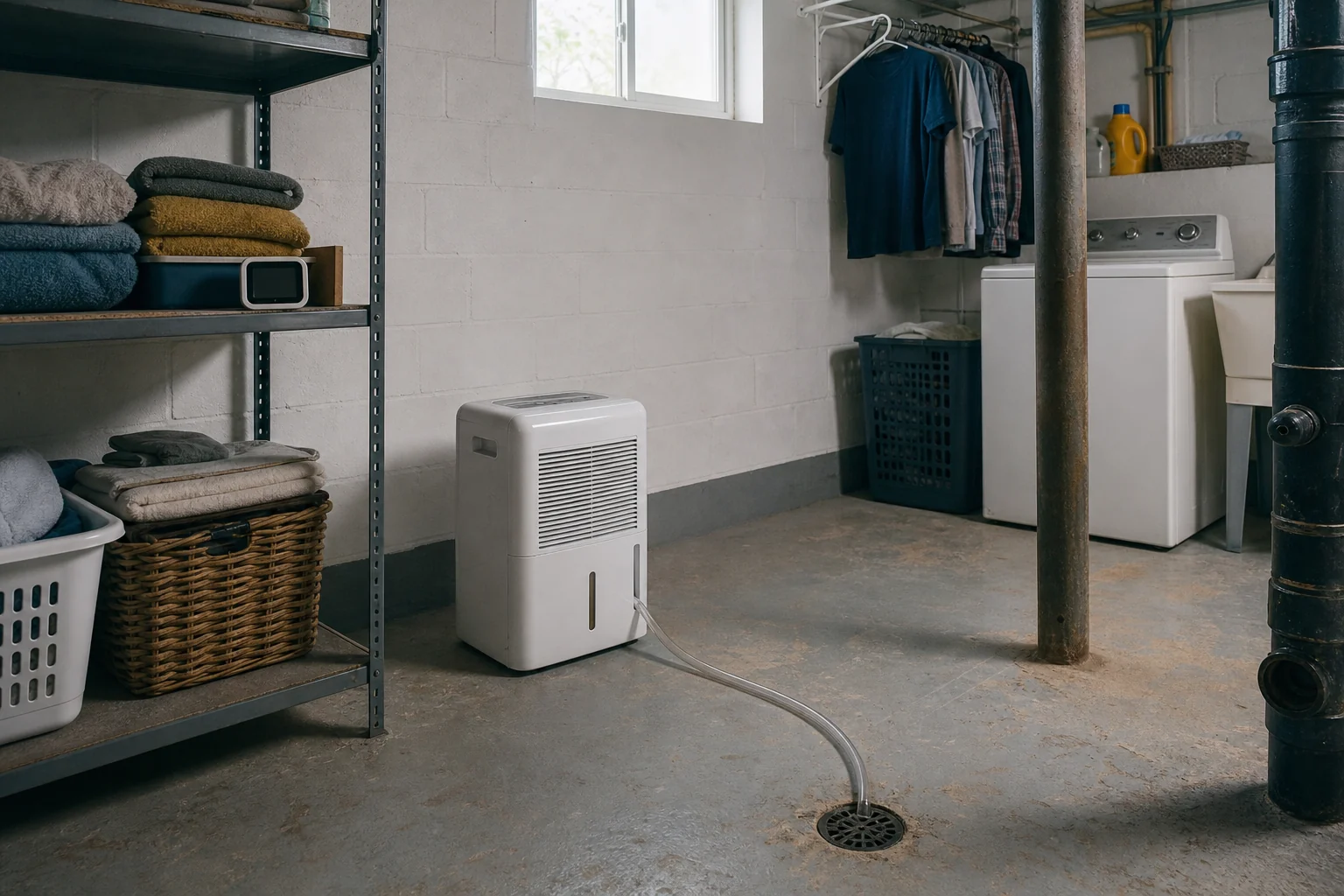
A dehumidifier is easy to buy for the wrong reason. The bucket looks large, the control panel looks reassuring and a bold capacity number suggests that dampness can be solved by choosing the strongest machine. But a useful dehumidifier is not selected by appearance or tank size. It is selected by how much water the room produces, how that water will leave the machine and whether the room has a moisture problem that an appliance cannot repair.
Begin with the source of the moisture
Condensation after a humid week is one problem. Water entering through a foundation crack, a leaking pipe or a poorly drained exterior wall is another. A dehumidifier can reduce airborne moisture, but it cannot make a leak harmless. The EPA's mold guidance is direct: moisture control begins with repairing leaks and drying wet materials quickly.
Walk through the space before shopping. Look for staining near walls, damp carpet edges, efflorescence on masonry, condensation on cold pipes and musty storage. Note whether the problem follows rain, appears only in summer or persists throughout the year. If water is visibly entering, address drainage, plumbing or envelope repairs first. The machine should manage residual humidity, not conceal an active defect.
A small humidity meter can make the diagnosis less subjective. The EPA generally recommends keeping indoor relative humidity between 30 and 50 percent. A lower level that remains above that range after obvious leaks are repaired is a reasonable candidate for dehumidification.
Capacity is water removed, not water stored
Dehumidifier capacity is normally described in pints of water removed in 24 hours under specified test conditions. The removable bucket is only a temporary container. A machine with a modest bucket may still remove a large amount of moisture if it drains continuously; a large bucket does not make a weak compressor more capable.
ENERGY STAR recommends matching capacity to both floor area and the degree of dampness. For spaces below 2,000 square feet, its broad guidance moves from roughly 20 to 30 pints per day for slightly or moderately damp rooms toward 30 to 50 pints for wet rooms. Larger spaces and more severe moisture require greater capacity. These figures are a starting point, not a substitute for the actual room conditions.
| What the room tells you | Likely condition | What to prioritize |
|---|---|---|
| Humidity rises on muggy days, with no odor or visible dampness | Slightly damp | Right-sized capacity, quiet operation and an accurate humidistat |
| Persistent musty smell or occasional condensation | Moderately to very damp | More capacity and a reliable continuous drain |
| Visible sweating, damp patches or water after rain | Wet or an active building problem | Repair the moisture source before relying on the appliance |
An undersized machine may run continuously without reaching the target. Slightly oversizing can be sensible when the room is cool, laundry dries nearby or doors regularly open to humid air. But extreme oversizing is not a shortcut: it can cost more, take more space and still fail if the real problem is water intrusion.
Decide where the water will go
Drainage is the most practical difference between a dehumidifier that becomes part of the room and one that is eventually switched off. Buckets are simple, but they stop the machine when full and may need emptying every day during humid weather. That routine is acceptable only if someone will reliably maintain it.
A gravity hose is quieter and simpler, but the drain must sit below the outlet and the hose needs a continuous downward path. A built-in pump can send water higher or farther, which is useful when the only sink or drain is above the machine. Pumps add cost and another component to maintain, so buy one because the route requires it, not because it sounds more advanced.
- Bucket: flexible placement, but frequent attention.
- Gravity drain: low-maintenance when a suitable floor drain is nearby.
- Pump drain: useful for vertical lift, with added noise and complexity.
Check the hose connection, included accessories and restart behavior after a power outage. A laundry room or unattended basement benefits from automatic restart and a drain setup that cannot be easily kinked or displaced.
Cool rooms change the comparison
Compressors can collect frost when air temperatures fall. If the lower level is cool for much of the year, check the manufacturer's operating-temperature range and whether automatic defrost is documented. Marketing copy that only describes warm summer use does not answer this question.
Placement matters as well. Leave the clearance required by the manual, keep filters accessible and avoid pushing the intake against a wall or curtain. If the floor plan contains separated rooms, one central unit may not circulate enough air through closed doors. Moving air deliberately or using smaller zones can be more effective than buying one oversized machine for the total square footage.
Buy for the sound and energy you will tolerate
A machine that runs near a guest room, office or television should be evaluated at the fan speed you will actually use. Published sound figures can help, but they do not describe compressor cycling, vibration on an uneven floor or a pump activating. Rubber feet, a level surface and some distance from a wall can reduce resonance.
Energy use is a better long-term comparison than purchase price alone. Estimate annual cost from the rated wattage, likely daily run time and local electricity price. An efficient unit that reaches the set point and cycles off can be less expensive to live with than a cheaper unit running continuously. ENERGY STAR certification provides a useful filter, but correct sizing and a clear drain path still determine whether the machine works in the home.
The best dehumidifier is the one that reaches a sensible humidity level, drains without supervision and does not distract from the repair the building may need.
Features that earn their place
A readable humidistat and an easy-to-set target are essential. Automatic restart is valuable in areas with brief power interruptions. A washable, accessible air filter lowers maintenance friction. Casters and a well-positioned handle matter if the machine moves between laundry and storage zones.
App control is optional. Remote humidity history may help diagnose a seasonal pattern, but it does not improve extraction capacity. Treat connectivity as a convenience after capacity, drainage, temperature range, noise and replacement-part availability have been resolved.
Measure before you shortlist
- Floor area, ceiling height and whether doors divide the space.
- Humidity readings over several days, including after rain.
- Any visible leak, damp material or drainage problem that needs repair.
- Distance and vertical drop to a floor drain, sink or condensate route.
- Lowest winter room temperature and the documented operating range.
- Acceptable sound level, filter access and two years of running cost.
Our selection frame
We would compare basement dehumidifiers by tested daily capacity, humidistat control, drainage options, low-temperature documentation, energy efficiency, service access and replacement-part availability. We would not rank a model by bucket size, app features or a single promotional claim.